

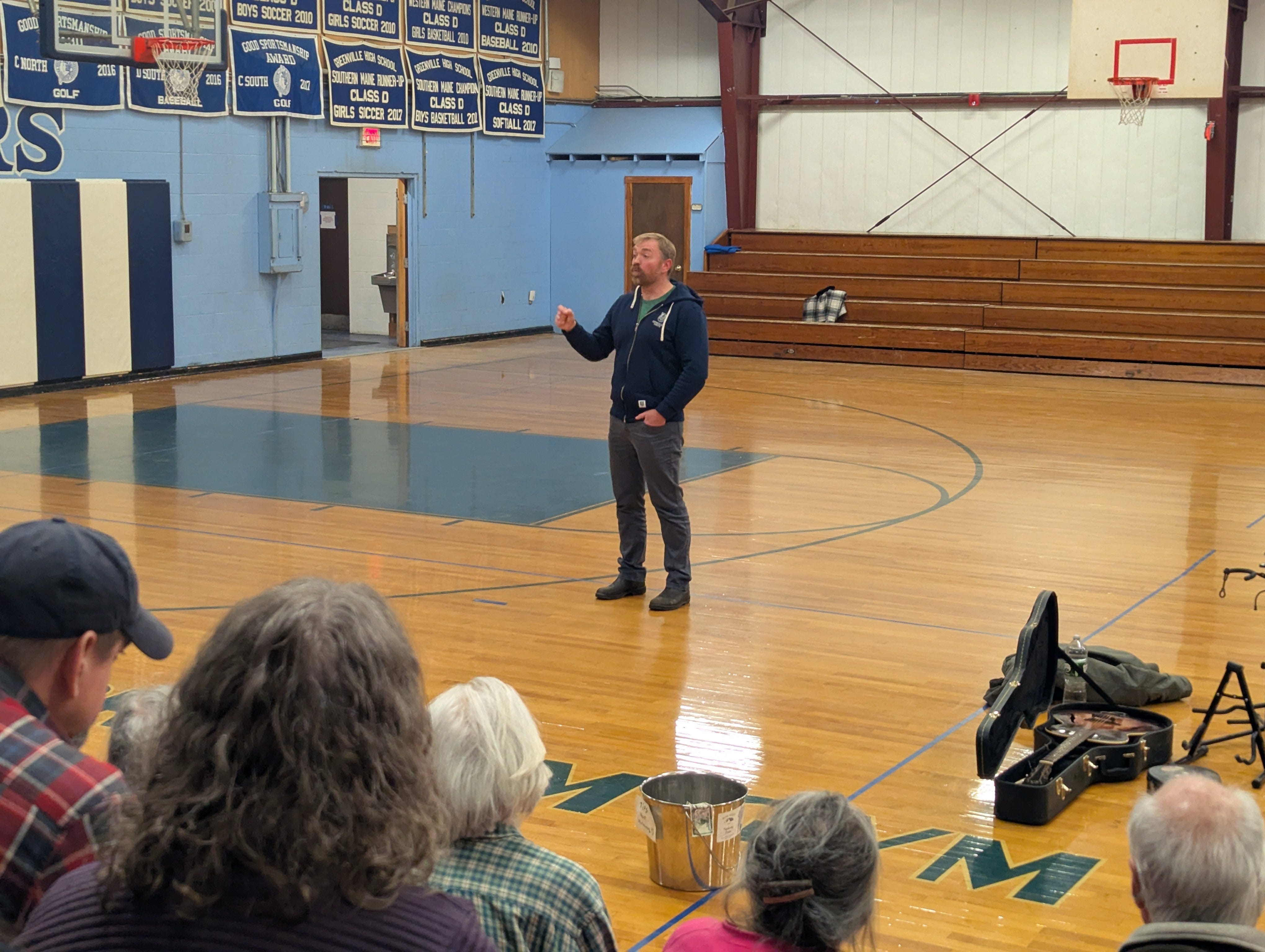
“I’ve made mistakes in my life, mistakes that I regret, that I live with, that I continue to learn from. And I’m still far from perfect. But every day I wake up and I try to be a little bit better and a little bit kinder than I was the day before. And if you give me the chance, I will be a senator for the people who cannot afford to buy a senator. I will stand up for you and against billionaires and greedy corporations.” -Graham Platner’s post-primary victory speech
Barring another actually campaign-ending scandal, Graham Platner is going to be the Maine Democratic Party’s candidate for Senate this November.
In the June 9 primary, a week after the New York Times and other outlets reported on his troubled relationship history and after months of coverage of his Reddit posts and now covered up chest tattoo, Platner received approximately 72 percent of the vote. He won essentially every town and city in Maine and received more votes than every Republican candidate for governor combined got in their primary.
But is he working class? Alan Elrod, a contributing editor at the great outlet Liberal Currents, argued in his most recent column that “much of Platner’s working class persona is a mixture of cosplay and cipher.” Platner’s family appears to be quite rich, Elrod notes, and he attended (and then dropped out of) some very prestigious schools.
This is also the tact taken by Republican comms staffers, whose first ad post Platner winning the primary begins by calling him a “hobby oyster farmer.”
Determining whether someone is or is not really a member of the working class can be fun, I guess. And it can even set you up for a decent career in certain left-intellectual circles. But the more important question that will actually determine whether Democrats take back the Senate this year is simply, “does the working class like Platner?”
Listen to pundits and they’ll probably tell you the working class doesn’t like Platner: After all, Platner is a “gentry liberal,” who appeals most to retirement-age Democratic partisans so he can’t really win over the cross-pressured working-class voters who voted for Trump in 2024.
But the pundits are wrong, to an extent. They’ve either hyperfocused on the Democratic primary polling, totally ignoring polling of the general election match-up, or complained that Platner isn’t winning a majority of ‘working-class’ votes in general election polls. Below are the first few examples that came to mind. (Emphases added.)
James Billot for UnHerd (Mar. 24):
According to a survey of likely voters by Pan-Atlantic Research, Platner leads Janet Mills 56% to 32% among those earning more than $100,000, while the race is essentially even among those below that income threshold. The regional split mirrors that pattern: he is ahead in the more urban and affluent First District, while Mills leads in the rural, working-class Second District, which has backed Trump in the past three presidential elections.
Lakshya Jain and Armin Thomas for The Argument (Mar. 30):
Despite his reputation as a working-class whisperer, Platner is actually doing far better with upscale Democratic whites than with non-college Democrats. Each primary poll with regional breakdowns has shown a common theme: Mills does far better among the blue-collar Democrats in the rural north of the state, while Platner cleans up with wealthy, coastal liberals who skew college-educated.
And Lauren Egan for The Bulwark (Jun. 7):
It’s just one survey, but a poll of likely voters conducted last month by UMass Lowell/YouGov found incumbent GOP Sen. Susan Collins led among non-college-educated voters by 7 points, while Platner led among college-educated voters by 25 points.
The issues with all of this are that A) the electorate in a Democratic primary is not the same as the electorate in a general election1 and B) non-college voters tend not to like Democrats very much.
Every Democrat would love it if Platner could win the majority of non-college voters of course. But if that was the case, Collins would already be writing her concession speech and national Republicans would stop investing any money in the state.
What we should be doing to determine whether Platner, or any Democratic candidate, is especially good at appealing to ‘working-class’ voters, or voters from any other category, is not comparing them to Republicans and lamenting they’re still losing the low-education vote. We should be comparing Democrats to other Democrats, apples to apples. And when you look at all the polling coming out of Maine, Platner is doing quite well with low-education and low-income (‘working-class’) voters relative to other Democrats.
Check out the approval ratings from the recent UMass Lowell poll. More non-college Mainers approve of Platner than of Gavin Newsom or AOC (Mills is tied) and more Mainers with less than $50,000 a year in income approve of him than Newsom, AOC, or Mills.
The net approval story is basically identical, although likely skewed a bit due to more Mainers reporting ‘no opinion’ for out-of-state Dems. Platner is far more popular with non-college and lower income voters than the alternative nominee, Gov. Mills.
Unfortunately, because pollsters aren’t typically in the habit of wasting money, it’s been a second since anyone really polled Mills vs. Collins hypothetical head-to-heads and reported any interesting cross-tabs. But when looking at two of the more recent polls where they did do that—both from March—and comparing Mills’ numbers to Platner’s, Platner polled better with lower education voters and more rural voters.
There could still be a campaign-ending scandal right around the corner for Platner. Republicans are almost certainly holding back some of their opposition research until the deadline passes and Platner can no longer drop out of the race to be replaced by another populist Dem like Troy Jackson.
But, according to pretty much every reputable poll thus far, the working class likes Platner more than they like his fellow Democrats. Democratic partisans love him.
And in what promises to be a blue wave year, that will probably be more than enough to finally get Susan Collins out of the Senate this November. But we’ll have to wait and see.
And Platner’s commanding performance in the primary this week of course showed that he did garner a lot of support from rural voters in the Democratic primary.
Excellent analysis!
In examining the February University of New Hampshire polling on the Maine Senate race, I found that Platner fared better among non-college-educated voters than Mills too.
https://substack.com/@delacoju/note/c-268311238?r=9xfzg&utm_medium=ios&utm_source=notes-share-action